
TLDR
Acupuncture alone is not a fix for foot pain, but when combined with targeted mobility work and progressive strengthening, it can reduce pain enough to let you move better and rebuild the motor control your foot may have lost after injury. The evidence is variable, so the goal is not to rely on needles long-term; it is to use them as a window to do the exercise-based work that creates real, lasting tissue tolerance.
Your foot hurts. You have tried rest, ice, and stretching, and the pain keeps coming back. If you are wondering whether acupuncture fits anywhere into your recovery, you are asking the right question, and the honest answer is: it depends on how you use it.
Acupuncture has a complicated reputation in the world of musculoskeletal care, the research around it is genuinely mixed. What the evidence does support is that acupuncture works well as an adjunct, meaning it works alongside other treatment, not instead of it. When the goal is to reduce pain enough to allow proper movement, strengthen the structures of the foot and ankle, and restore the proprioception (your body’s sense of where it is in space) lost during injury, acupuncture earns its place in a well-structured treatment plan.
Read on, and we will walk through exactly how that works.
Why Does Foot Pain Keep Coming Back After an Injury?
Recurrent foot pain often comes down to what gets lost during the original injury, not just the tissue damage itself. When you sprain an ankle, strain the plantar fascia (the connective tissue running along the sole of your foot), or deal with a chronic overuse problem, your nervous system takes a hit alongside your muscles and ligaments.
Proprioception, the feedback loop between your foot and your brain that tells you how to balance and move, gets disrupted. Motor control, the coordinated firing of muscles that stabilizes each step you take, becomes less precise. If you return to activity before those qualities are restored, your foot compensates. It loads unevenly. It moves less efficiently. And the pain cycle could start again.
This is why passive treatment alone rarely solves the problem. Rest reduces acute inflammation, but it does not retrain your foot to move correctly. That retraining requires active work, and to do that work well, you often need the pain level to come down first.
What Does Acupuncture Actually Do for Foot Pain?
Acupuncture involves inserting fine needles into specific points on the body to influence pain signalling, circulation, and muscle tone. In a physiotherapy context, this approach is often applied directly to muscle tissue or trigger points, and it targets the neuromuscular system more than the traditional meridian framework from Chinese medicine.
Physiologically, needle insertion is intended to stimulate the nervous system and triggers the release of endogenous opioids, which are your body’s own pain-reducing chemicals. It can reduce localized muscle tension and improve blood flow to tissues that are healing slowly. For conditions like plantar fasciitis, Achilles tendinopathy, and post-ankle-sprain stiffness, many patients notice a meaningful reduction in pain following treatment.
Here is what is worth being clear about: the evidence varies considerably depending on the condition, the individual, and the practitioner. Acupuncture does not work the same way for everyone, and the effect is not always large. It is not a standalone treatment, and it is not something you should rely on indefinitely. It is a tool with a specific purpose.
How Acupuncture Creates a Window for Movement and Strengthening
When pain is high, your body guards. Muscles around the foot and ankle stay tight, movement patterns become restricted, and you unconsciously avoid loading the affected area. Even when you try to do rehabilitation exercises, pain limits your range and interferes with quality of movement.
Acupuncture is one way that you can lower that pain signal enough to move through a more complete range, load the foot progressively, and practice movement patterns under better conditions. That window, even if it lasts only a few hours or days after treatment, is when the real work gets done.
What That Work Looks Like in Practice
Inside that window of reduced pain, a structured rehabilitation program typically includes:
- Ankle mobility drills targeting dorsiflexion (the ability to bring your toes up toward your shin), which is frequently restricted after injury and directly affects walking mechanics
- Intrinsic foot strengthening, building the small muscles inside the foot that control arch stability and toe function
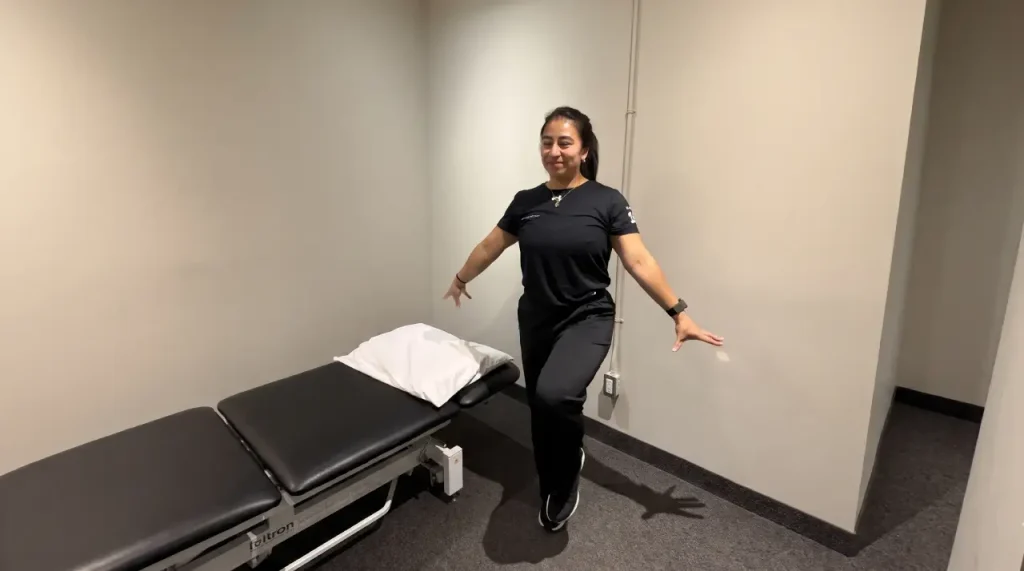
- Single-leg balance and proprioceptive training to restore the sensory feedback your nervous system lost during injury
- Progressive loading of the plantar fascia or Achilles tendon using eccentric and isometric exercises that build tissue tolerance over time
These exercises are not difficult to understand, but they require a pain level low enough to perform them with proper form. Acupuncture could help get you there.
What the Evidence Supports and Where It Falls Short
For plantar fasciitis specifically, several studies have found that acupuncture reduces heel pain in the short term more effectively than sham treatments. For ankle instability and post-injury stiffness, the evidence is thinner but still supportive of its use as part of a combined approach. Where the evidence consistently falls short is in demonstrating that acupuncture alone produces better long-term outcomes than exercise-based rehabilitation on its own.
That is actually the most useful finding for patients to understand. Acupuncture is not trying to replace exercise; it is trying to make exercise more accessible when pain is in the way. The combination of acupuncture with manual therapy and progressive movement-based rehabilitation is where the evidence is most favourable.
Is Acupuncture Right for Your Foot Pain?
Whether acupuncture belongs in your treatment plan depends on a few factors worth discussing with your physiotherapist.
| Situation | Acupuncture Role |
|---|---|
| Acute foot or ankle pain limiting basic movement | Helpful to reduce pain enough to begin early mobility work |
| Chronic plantar fasciitis not responding to stretching alone | Adjunct to progressive loading and intrinsic foot strengthening |
| Recurring ankle sprains with poor proprioception | Supports neuromuscular retraining when used alongside balance work |
| Post-surgical foot rehabilitation | Should be cleared by your surgeon; timing matters |
| Mild foot stiffness with no significant pain barrier | Exercise alone is likely sufficient; acupuncture adds less value here |
The honest answer is that acupuncture is not necessary for everyone with foot pain. If your pain is manageable and you are already making progress with mobility and strengthening work, adding needles may not change your outcome. But if pain is consistently preventing you from loading your foot or completing your rehabilitation exercises with quality movement, it is worth considering as part of a broader plan.
Key Takeaways
- Acupuncture works as an adjunct to exercise-based rehabilitation for foot pain, not as a standalone treatment or long-term solution.
- The evidence around acupuncture is variable; it shows consistent short-term pain reduction for conditions like plantar fasciitis but does not outperform exercise alone over time.
- The primary value of acupuncture in foot pain recovery is creating a temporary reduction in pain that allows patients to move with better quality and engage in strengthening work more effectively.
- Proprioception and motor control, both disrupted by injury, must be actively retrained through progressive exercise; acupuncture supports this but does not replace it.
- Ankle range of motion, intrinsic foot strength, and single-leg balance are the movement targets most closely linked to preventing recurrent foot and ankle pain.
- A physiotherapist-guided plan that combines manual therapy, acupuncture when appropriate, and progressive loading is where patients tend to see the most consistent functional improvement.
Ready to Move Without Foot Pain Getting in the Way?
If foot pain keeps interrupting your activity and you want a clear picture of what is actually going on and what to do about it, the team at Strive Physiotherapy & Performance in Kitchener is ready to work through it with you. Whether acupuncture fits your plan or not, the goal is the same: get you moving well, rebuild your foot’s strength and control, and stop the cycle of pain coming back. Book your assessment and take the first step toward getting back to what you want to do.
Frequently Asked Questions
How many acupuncture sessions are needed for foot pain?
There is no fixed number that applies to everyone. Most patients who respond well to acupuncture notice a meaningful change within three to six sessions, but the more important variable is what you do with the pain relief between and after treatments. If you are using that window to do your mobility and strengthening work consistently, you likely need fewer sessions overall.
Can acupuncture help with plantar fasciitis specifically?
Acupuncture for plantar fasciitis has been studied more than most other foot conditions, and the short-term evidence is reasonably supportive. It tends to reduce heel pain and improve tolerance for loading activities. The clinical recommendation is to use it in combination with a progressive foot loading program rather than as the primary or only treatment.
Is trigger-point needling the same as acupuncture for foot pain?
Trigger-point needling uses the same type of fine needle as acupuncture but targets myofascial trigger points and neuromuscular tissue based on anatomy and movement assessment rather than traditional meridian points. Physiotherapists in Ontario who are trained in this technique apply it as part of a broader musculoskeletal treatment plan. Both approaches aim to reduce pain and improve tissue function, but their theoretical frameworks differ.